Key Takeaways:
What benefits does PIM bring to manufacturers? With PIM, manufacturers can easily manage large and complex product catalogs, technical specifications, and certifications in one location, thus reducing errors, speeding time-to-market, and ensuring accurate data flows across suppliers and distributors.
How does PIM improve manufacturing collaboration? PIM serves as a central hub for product data, enabling smooth coordination between departments, suppliers, and distributors while supporting compliance and helping manufacturers expand efficiently into global markets.
Why is PIM critical for manufacturing growth? As manufacturers adopt Industry 4.0, PIM supports predictive analytics, empowers smart factories, and enables manufacturers to scale efficiently, adapt to global markets, and stay competitive in a rapidly changing industry.
|
Introduction In the era of digitalization, data is the backbone of manufacturing. A massive volume of data is generated in manufacturing operations, such as production lines, ERP systems, sensors, etc. As manufacturers transition to digitalization, real-time data generation has a growing impact on production processes. However, the actual value of this data depends on how well it is organized, analyzed, and utilized. Today, manufacturers are aggressively adopting next-gen technologies and connected systems to tap new market opportunities. Product Information Management (PIM) has become a critical enabler for manufacturers navigating the complexities of data management, especially product master data. A PIM platform delivers the capability to consolidate, enrich, and syndicate accurate and trusted product information across multiple touchpoints, building a foundation for operational efficiency, innovation, and growth. For IT leaders—CIOs, CTOs, CMOs, and CSOs—Product Information Management (PIM) has emerged as a key solution to address rising product information challenges. Integrating PIM with emerging technologies like ERP systems, AI analytics, IoT sensors, 3D printing, digital twins, and more opens up new possibilities. |
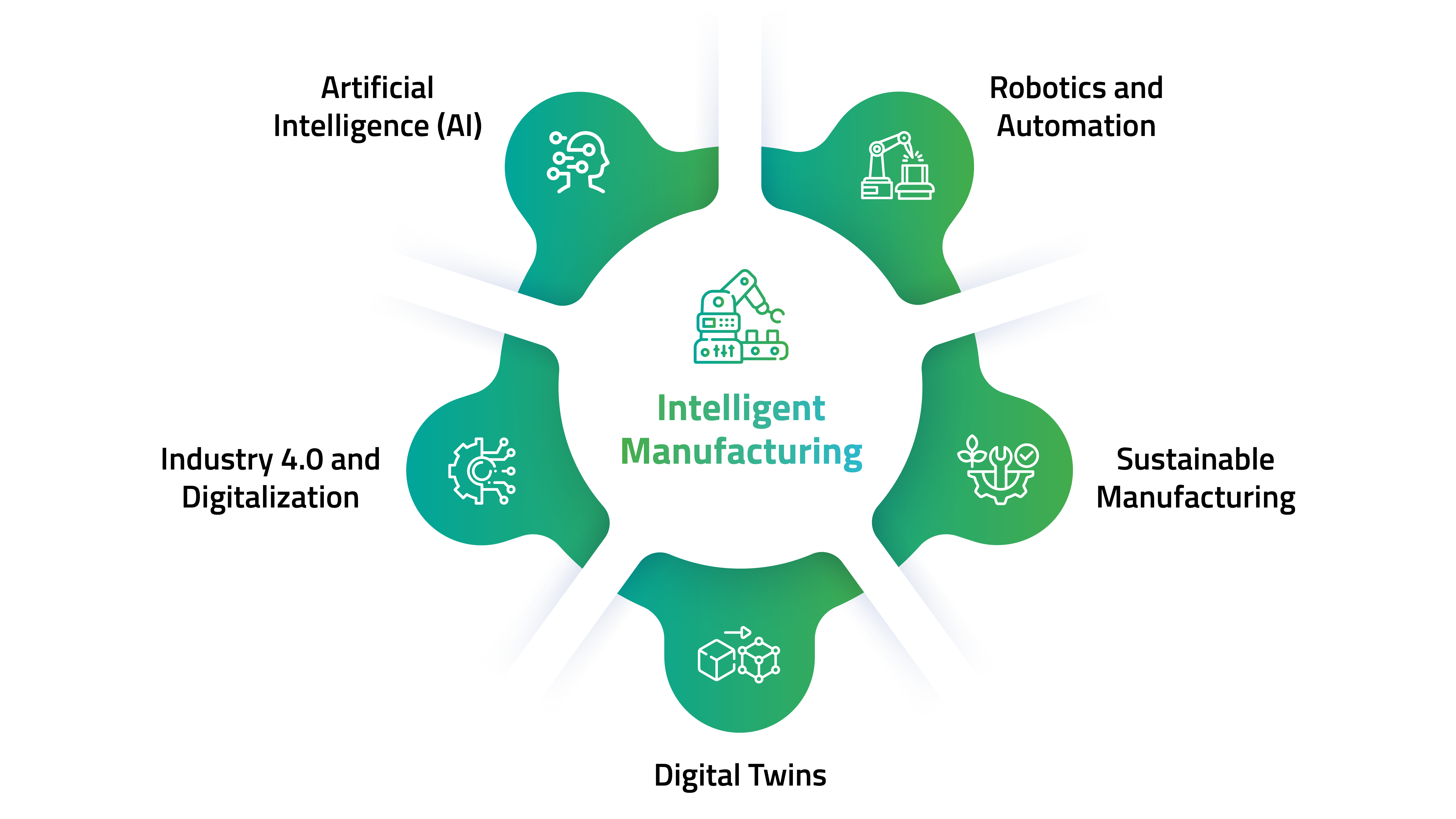
Key Trends Shaping Modern Manufacturing
The role of PIM becomes crucial to navigating the journey towards the above-mentioned trends, especially in consolidating and managing siloed product content and digital assets from diverse resources. |
How PIM Contributes to the Manufacturing Operations?
It’s hard for manufacturers to maintain and track a trusted version of product data without a PIM strategy. A Product Information Management strategy can directly and indirectly impact customer experience management, manufacturing operations, and new value creation. Here is how:
|
How Happiest Minds Can Help You in Manufacturing?Happiest Minds Technologies combines expertise in digital transformation and PIM implementation to empower manufacturers. By leveraging cutting-edge PIM capabilities, manufacturers can:
Happiest Minds is a Pimcore Strategic Partner with over 10 years of experience. We have successfully delivered hundreds of Pimcore implementations for global organizations. What steps is your organization taking to fully leverage the power of PIM in shaping your digital transformation journey? |